
เอ็มเทค สวทช. ร่วมหารือแนวทางความร่วมมือด้านการพัฒนาระเบียบวิธีคาร์บอนเครดิตกับ Asia Carbon Institute และเข้าร่วมงาน IETA Asia Climate Summit 2026

คณะนักวิจัยจาก สถาบันเทคโนโลยีและสารสนเทศเพื่อการพัฒนาอย่างยั่งยืน (TIIS) ศูนย์เทคโนโลยีโลหะและวัสดุแห่งชาติ (เอ็มเทค) สำนักงานพัฒนาวิทยาศาสตร์และเทคโนโลยีแห่งชาติ (สวทช.) เข้าร่วมการประชุม ACI × NSTDA Methodology Implementation Workshop ซึ่งจัดขึ้นภายใต้การประชุม IETA Asia Climate Summit (ACS) 2026

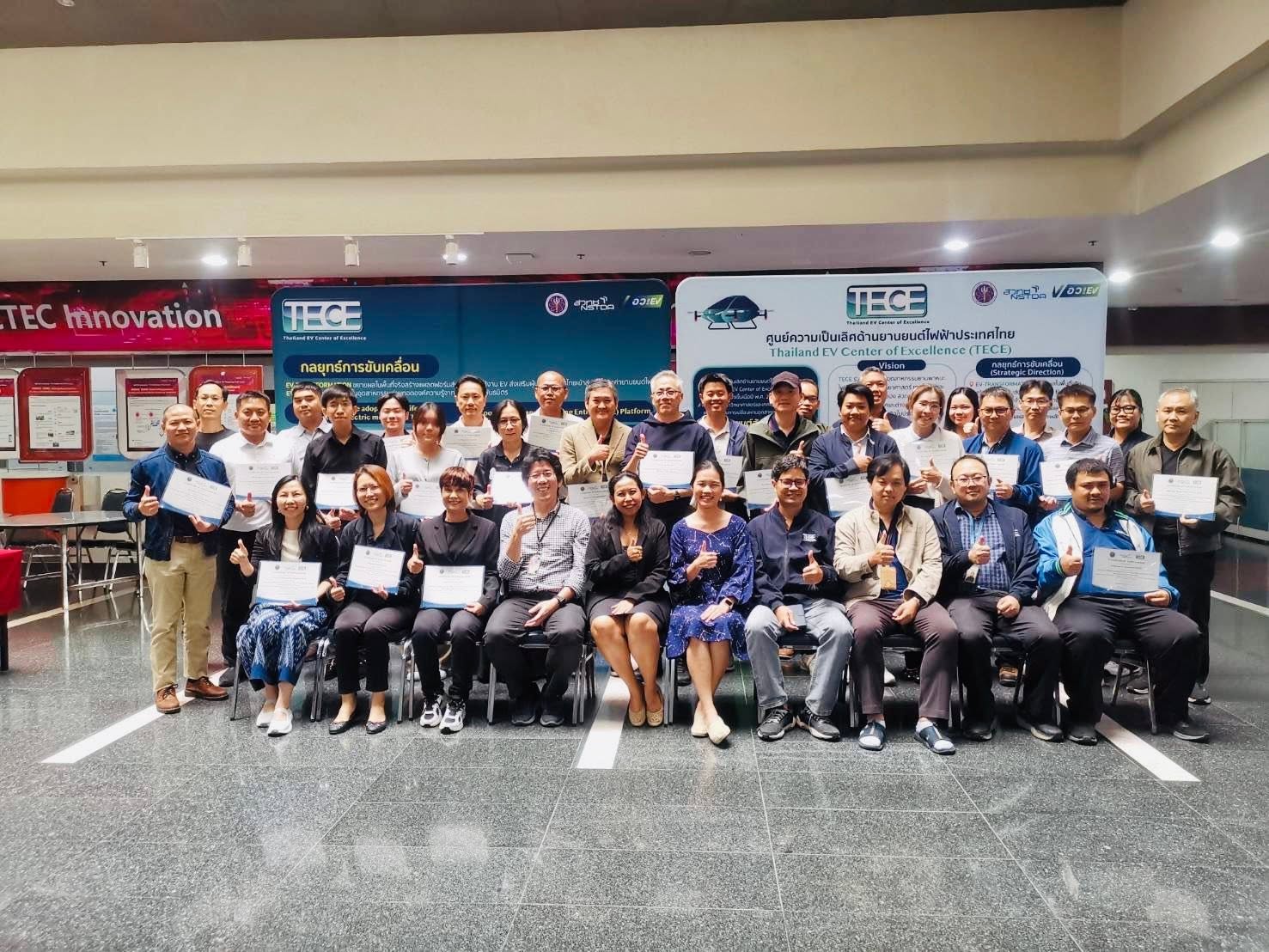
TIIS ร่วมจัดอบรมเชิงปฏิบัติการด้านการประเมิน Carbon Footprint จากข้อมูล CAN Bus ในยานยนต์ไฟฟ้า สู่การขอรับรอง Carbon Credit

ดร.นงนุช พูลสวัสดิ์ และนางสาวข้าวประดับดิน สงมา จากสถาบันเทคโนโลยีและสารสนเทศเพื่อการพัฒนาที่ยั่งยืน (TIIS) ศูนย์เทคโนโลยีโลหะและวัสดุแห่งชาติ (MTEC) มีส่วนร่วมในการจัดหลักสูตรอบรมเชิงปฏิบัติการ “การประเมิน Carbon Footprint จากข้อมูล CAN Bus ภายในยานยนต์ไฟฟ้า สู่การขอรับรอง Carbon Credit (ครั้งที่ 1)” (Assessing Carbon Footprint Using CAN Bus Data in Electric Vehicles for Carbon Credit Certification)

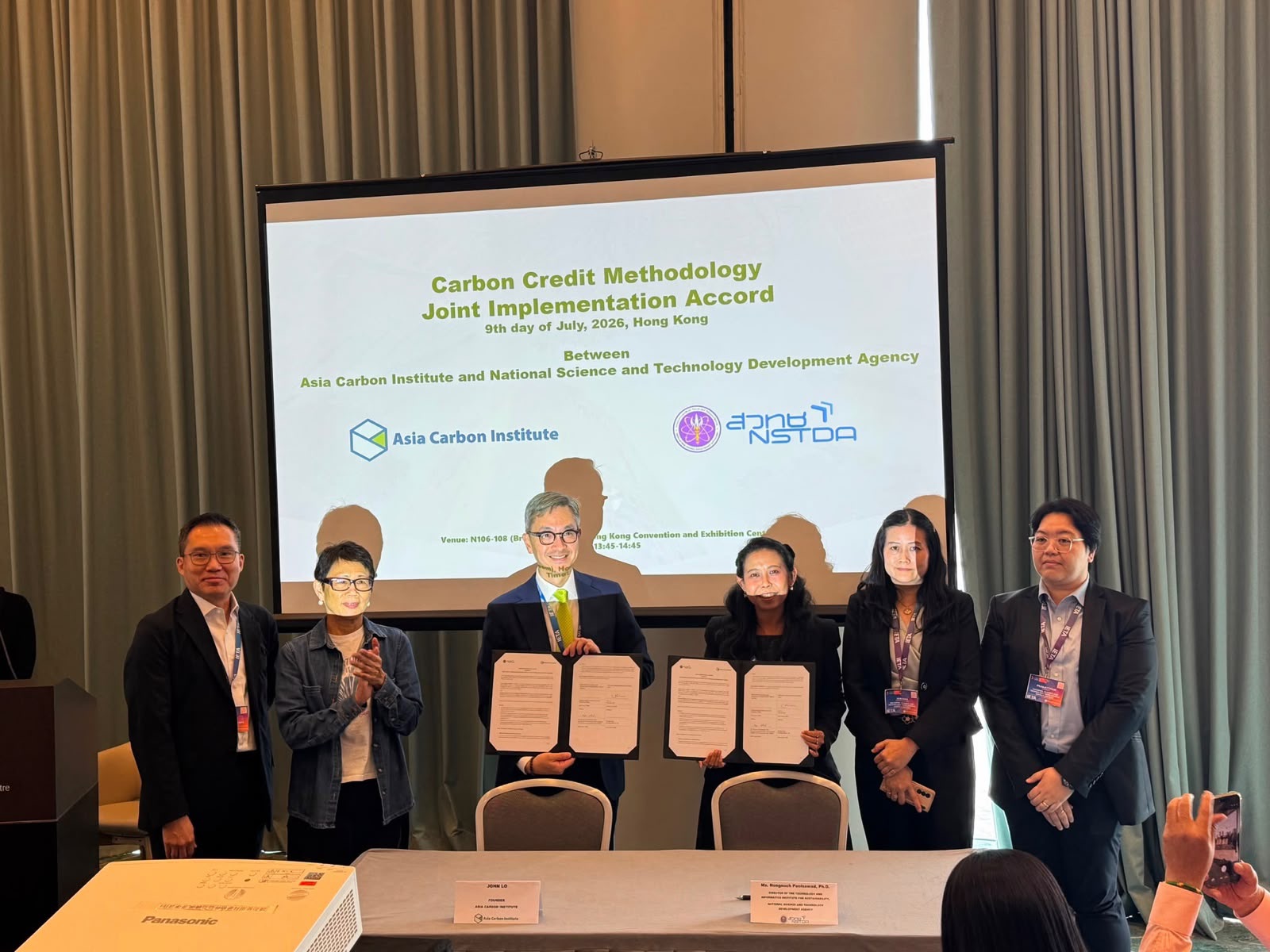
สวทช. และ Asia Carbon Institute ลงนามความร่วมมือด้านระเบียบวิธีคาร์บอนเครดิต เพื่อขับเคลื่อนการบูรณาการตลาดคาร์บอน

ภายในงาน Asia Climate Summit 2026 ณ เขตบริหารพิเศษฮ่องกง สำนักงานพัฒนาวิทยาศาสตร์และเทคโนโลยีแห่งชาติ (สวทช.) โดย ดร.นงนุช พูลสวัสดิ์ ผู้อำนวยการกลุ่มวิจัยสถาบันเทคโนโลยีและสารสนเทศเพื่อการพัฒนาที่ยั่งยืน (TIIS) ในฐานะผู้แทนผู้อำนวยการ สวทช. ร่วมกับ Asia Carbon Institute (ACI) โดย Mr. John Lo ประธานและผู้ก่อตั้ง Asia Carbon Institute (ACI)

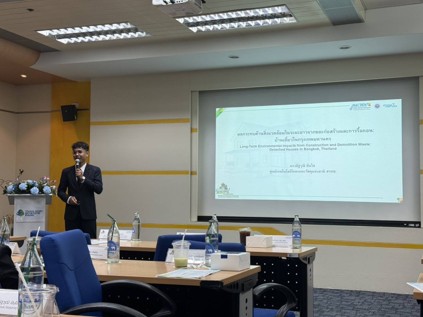
นักวิจัยหลังปริญญาเอก CEDAR–TIIS/MTEC นำเสนอผลงานวิจัยด้านผลกระทบสิ่งแวดล้อมจากขยะก่อสร้างและรื้อถอน ในการประชุมวิชาการประจำปี สวทช. ครั้งที่ 21 (NAC2026)

นายณัฐวุฒิ ขันใส นักวิจัยหลังปริญญาเอก ทีมวิจัยเศรษฐกิจหมุนเวียนและการวิเคราะห์ข้อมูลเชิงบูรณาการเพื่อการฟื้นสร้างอย่างยั่งยืน (CEDAR) สถาบันเทคโนโลยีและสารสนเทศเพื่อการพัฒนาที่ยั่งยืน (TIIS) ศูนย์เทคโนโลยีโลหะและวัสดุแห่งชาติ (MTEC) ได้นำเสนอผลงานวิจัยแบบปากเปล่า (Oral Presentation) เรื่อง “Long-Term Environmental Impacts from Construction and Demolition Waste: Detached Houses in Bangkok, Thailand”

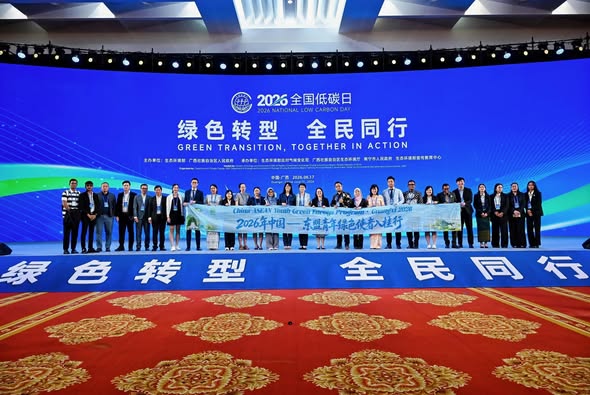
TIIS ร่วมโครงการ China-ASEAN Youth Green Envoys Program 2026 เสริมสร้างเครือข่ายความร่วมมือด้านการพัฒนาสีเขียวและคาร์บอนต่ำระหว่างจีนและอาเซียน

สถาบันเทคโนโลยีและสารสนเทศเพื่อการพัฒนาที่ยั่งยืน (TIIS) ศูนย์เทคโนโลยีโลหะและวัสดุแห่งชาติ (MTEC) สำนักงานพัฒนาวิทยาศาสตร์และเทคโนโลยีแห่งชาติ (สวทช.) เดินหน้าส่งเสริมความร่วมมือด้านวิทยาศาสตร์ เทคโนโลยี และนวัตกรรมเพื่อการพัฒนาอย่างยั่งยืนในระดับนานาชาติ

A Dynamical Systems Approach to Modelling Food Loss of Fresh Fruit Bunches in Oil Palm Cultivation for Enhanced Sustainability

The purpose of this study was to investigate the best ratio of waste foundry sand (WFS), fly ash (FA), and electric arc furnace slag (EAF slag) for the production of geopolymer bricks. In this research study, WFS, FA, and EAF slag were mixed at the ratio of 70:30:0, 60:30:10, 50:30:20, and 40:30:30 with 8M sodium hydroxide (NaOH) and 98% purity sodium silicate (Na2SiO3) with a ratio of Na2SiO3/8M NaOH = 2.5. The mixtures were compacted in 5 cm × 5 cm x 5 cm molds and cured at an ambient temperature for 28 days. Then, their compressive strength was analyzed. The results showed that the geopolymer bricks with the highest compressive strength were those mixed at the 40:30:30 ratio, with a compressive strength of 25.76 MPa.

Analysis of Packaging Waste Generation Patterns and Waste Flows in Tourist Accommodations of North-eastern Thailand

The purpose of this study was to investigate the best ratio of waste foundry sand (WFS), fly ash (FA), and electric arc furnace slag (EAF slag) for the production of geopolymer bricks. In this research study, WFS, FA, and EAF slag were mixed at the ratio of 70:30:0, 60:30:10, 50:30:20, and 40:30:30 with 8M sodium hydroxide (NaOH) and 98% purity sodium silicate (Na2SiO3) with a ratio of Na2SiO3/8M NaOH = 2.5. The mixtures were compacted in 5 cm × 5 cm x 5 cm molds and cured at an ambient temperature for 28 days. Then, their compressive strength was analyzed. The results showed that the geopolymer bricks with the highest compressive strength were those mixed at the 40:30:30 ratio, with a compressive strength of 25.76 MPa.

Material circularity indicator for accelerating low-carbon circular economy in Thailand’s building and construction sector

The purpose of this study was to investigate the best ratio of waste foundry sand (WFS), fly ash (FA), and electric arc furnace slag (EAF slag) for the production of geopolymer bricks. In this research study, WFS, FA, and EAF slag were mixed at the ratio of 70:30:0, 60:30:10, 50:30:20, and 40:30:30 with 8M sodium hydroxide (NaOH) and 98% purity sodium silicate (Na2SiO3) with a ratio of Na2SiO3/8M NaOH = 2.5. The mixtures were compacted in 5 cm × 5 cm x 5 cm molds and cured at an ambient temperature for 28 days. Then, their compressive strength was analyzed. The results showed that the geopolymer bricks with the highest compressive strength were those mixed at the 40:30:30 ratio, with a compressive strength of 25.76 MPa.

Optimal Crop Pattern for the Maximum Net Income Using Linear Optimization in Mae Chaem District, Chiang Mai Province

The purpose of this study was to investigate the best ratio of waste foundry sand (WFS), fly ash (FA), and electric arc furnace slag (EAF slag) for the production of geopolymer bricks. In this research study, WFS, FA, and EAF slag were mixed at the ratio of 70:30:0, 60:30:10, 50:30:20, and 40:30:30 with 8M sodium hydroxide (NaOH) and 98% purity sodium silicate (Na2SiO3) with a ratio of Na2SiO3/8M NaOH = 2.5. The mixtures were compacted in 5 cm × 5 cm x 5 cm molds and cured at an ambient temperature for 28 days. Then, their compressive strength was analyzed. The results showed that the geopolymer bricks with the highest compressive strength were those mixed at the 40:30:30 ratio, with a compressive strength of 25.76 MPa.

Crop Water Requirement Estimation of Maize Using Remote Sensing in Mae Chaem District in Chiang Mai Province

The purpose of this study was to investigate the best ratio of waste foundry sand (WFS), fly ash (FA), and electric arc furnace slag (EAF slag) for the production of geopolymer bricks. In this research study, WFS, FA, and EAF slag were mixed at the ratio of 70:30:0, 60:30:10, 50:30:20, and 40:30:30 with 8M sodium hydroxide (NaOH) and 98% purity sodium silicate (Na2SiO3) with a ratio of Na2SiO3/8M NaOH = 2.5. The mixtures were compacted in 5 cm × 5 cm x 5 cm molds and cured at an ambient temperature for 28 days. Then, their compressive strength was analyzed. The results showed that the geopolymer bricks with the highest compressive strength were those mixed at the 40:30:30 ratio, with a compressive strength of 25.76 MPa.