Invited Speaker I
|
|
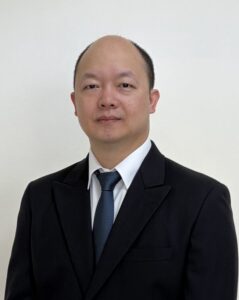
| Invited Speaker: Prof. Purit Thanakijkasem (King Mongkut’s University of Technology Thonburi, THAILAND) |
Title: Advances in Finite Element Simulation for Sheet Metal Forming |
|
Abstract: Finite element simulation has become an indispensable tool for the design and optimization of sheet metal forming (SMF) processes. Over the past decades, significant advances have been achieved through academic research, with many of these developments subsequently adopted in industrial practice. The growing demand for lightweight structures and the increasing use of advanced high-strength materials have created new challenges for accurate process modeling and performance prediction. This talk presents the current state of advanced SMF computational methods across both academia and industry. Furthermore, the critical role of tribology is examined, highlighting how advanced, dynamically variable friction models are replacing traditional constant coefficients to significantly improve predictive accuracy and optimize the forming process. |
Invited Speaker II
|
|
| Invited Speaker: Prof. Peerawatt Nunthavarawong (King Mongkut’s University of Technology North Bangkok, THAILAND) |
Title: Residual Stress Evaluation of Surface Coatings: Conventional and Advanced Techniques |
 |
Abstract: Residual stresses significantly affect the mechanical performance and long-term durability of the coatings. Vickers indentation and scratch testing are widely used as simple, cost-effective methods for estimating residual stresses. Although these approaches have historically been used to determine surface hardness and adhesion, they have shown promise in providing indirect insights into residual stress in materials. These approaches can also serve as practical tools for rapid on-site screening, especially in industrial settings where uptime and resources are limited. Besides, advanced techniques, namely synchrotron X-ray diffraction (S-XRD) and neutron diffraction, precisely quantify residual stresses. Thus, this presentation will cover the fundamentals of indentation, scratch testing, and S-XRD for residual stress evaluation, and case studies will prove their usefulness. The session also aims to demonstrate how these simple methods can complement advanced methodologies to provide a more effective workflow for evaluating residual stress in coatings. |
Invited Speaker III
|
|
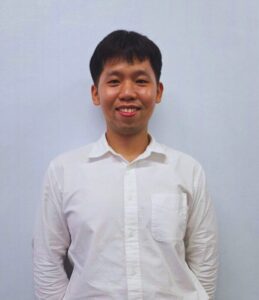
| Invited Speaker: Dr. Supakorn Suttidarachai (King Mongkut’s University of Technology North Bangkok, THAILAND) |
Title: Tribology in Railways: Overhead Line Equipment |
 |
Abstract: Railway electrification has been increasingly adopted to power rail vehicles as it allows greener transportation and zero emissions at the point of use. Overhead Line Equipment (OLE) is commonly utilised in high-speed trains such as the HS1 in the UK at 250 kph, and in urban lines such as the Airport Rail Link connecting the Suvarnabhumi Airport to central Bangkok. OLE delivers electrical power to the trains through a pantograph mounted on the roof of the trains. Current collection quality is governed by the interaction of the contact wire and the pantograph head. The periodic arrangement of the tensioned and flexible overhead line causes a variation in its spatial stiffness, meaning that the contact is subject to strong dynamics in response to pantograph passage. This talk gives an introduction to the tribological system of the pantograph-overhead line contact. Wear in copper alloyed overhead contact wires and carbon contact strips is discussed, followed by recent advancements in quantifying, and mitigating wear and associated failures. |
Invited Speaker IV
|
|
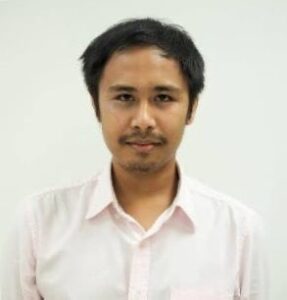
Invited Speaker: Dr. Pattarapong Nuasri (King Mongkut’s Institute of Technology Ladkrabang, THAILAND)
|
Title: White Etching Layers and Wheel-Rail Contact: Early-Stage Crack Initiation |
 |
Abstract: Surface damage on railway tracks significantly impacts operational safety and maintenance costs. The White Etching Layer (WEL)—a hard, brittle layer formed during operations or maintenance processes like rail grinding—is a major driver of wear and fatigue. Because field observation is challenging, this study reproduces artificial WEL using a weld spot arcing machine. These specimens are then subjected to controlled rolling contact testing in a twin-disc machine to mimic real-world wheel-rail interactions. This talk demonstrates the impact of the WEL on the contact between wheel and rail to provide critical insights into early-stage crack initiation in the rail material around the WEL, which helps improve predictive maintenance and the development of damage-resistant rail materials. |
Invited Speaker IV
|
|
| Invited Speaker V: Jun Xiao (Rtec-Instruments, Inc, USA) |
Title: Evolution of Testing Methods for Lubricants and Current Trends with Electrified Tribology |

|
Abstract: This presentation reviews the evolution of lubricant testing from conventional tribometers to advanced multifunctional platforms for electrified tribology. It highlights modern techniques including traction, rolling-sliding, micropitting, electrical contact resistance, and in-situ 3D surface characterization for evaluating next-generation lubricants. Recent developments in new ASTM standard testing methods about 4-Ball Extreme Pressure (EP) testing under a constant load ramp rate are also presented, providing improved repeatability and continuous evaluation of load-carrying capacity compared with conventional step-loading methods. Applications in electric drivetrains, bearings, and gears are discussed, together with future trends in autonomous tribological testing. |