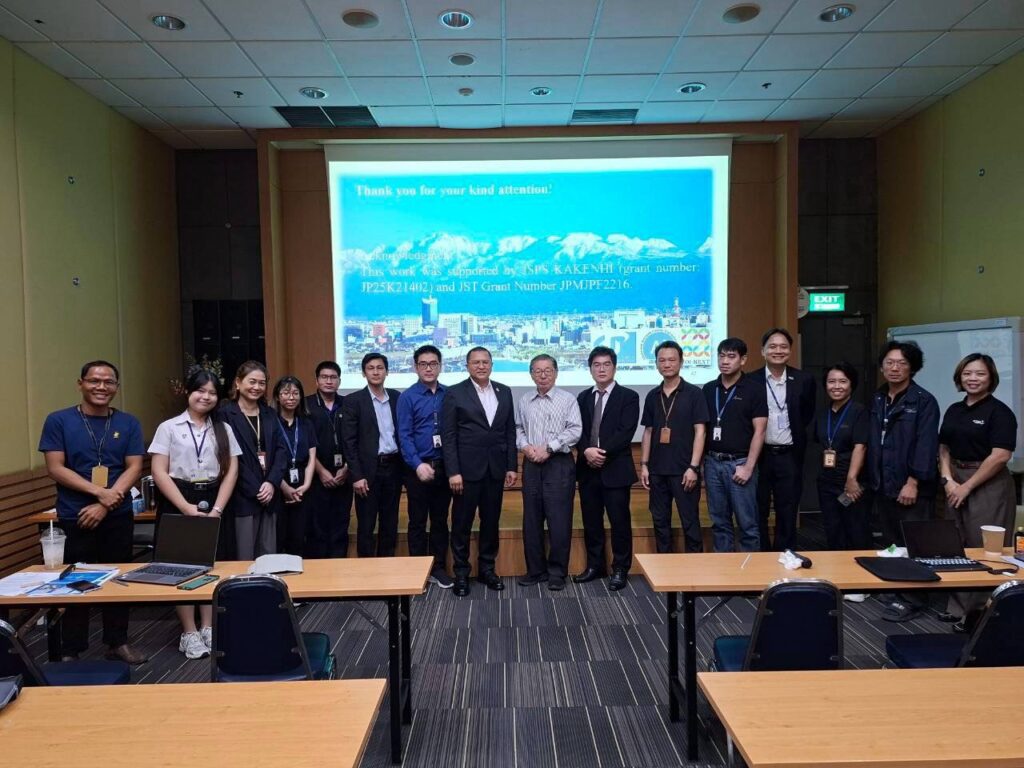
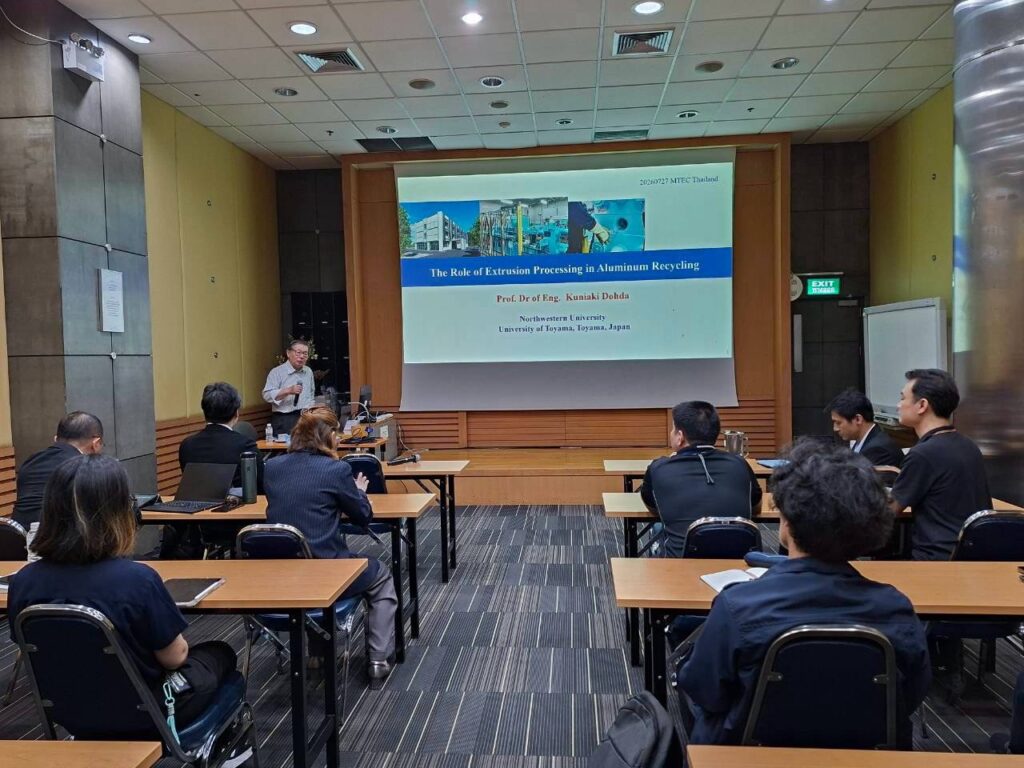
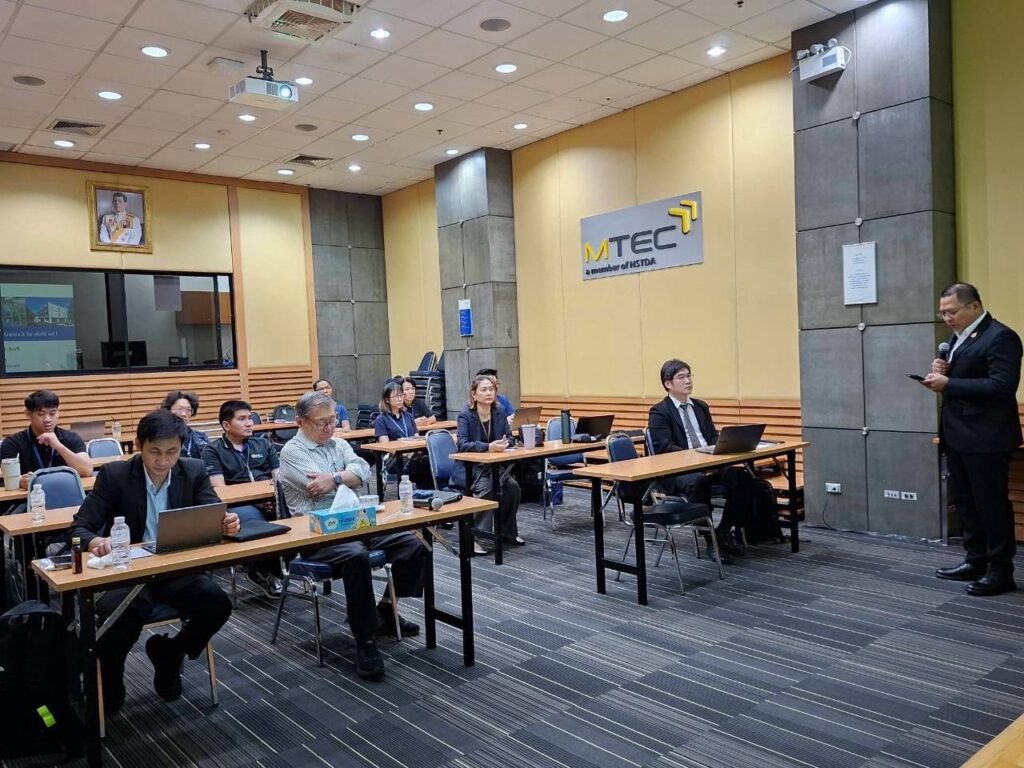
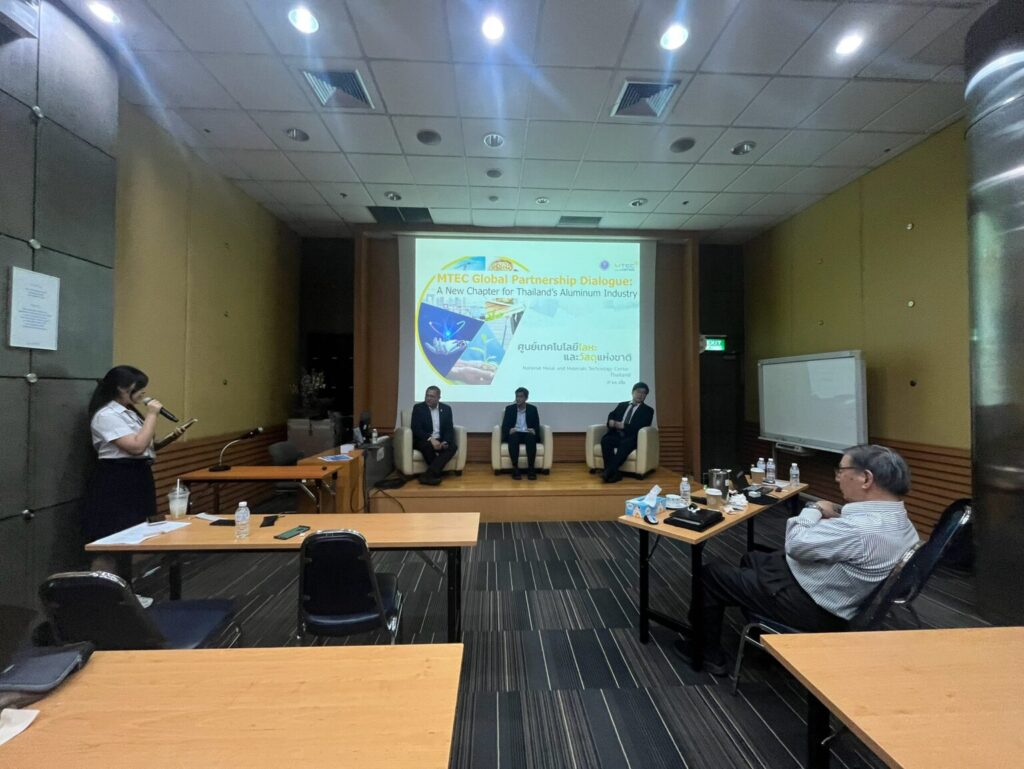
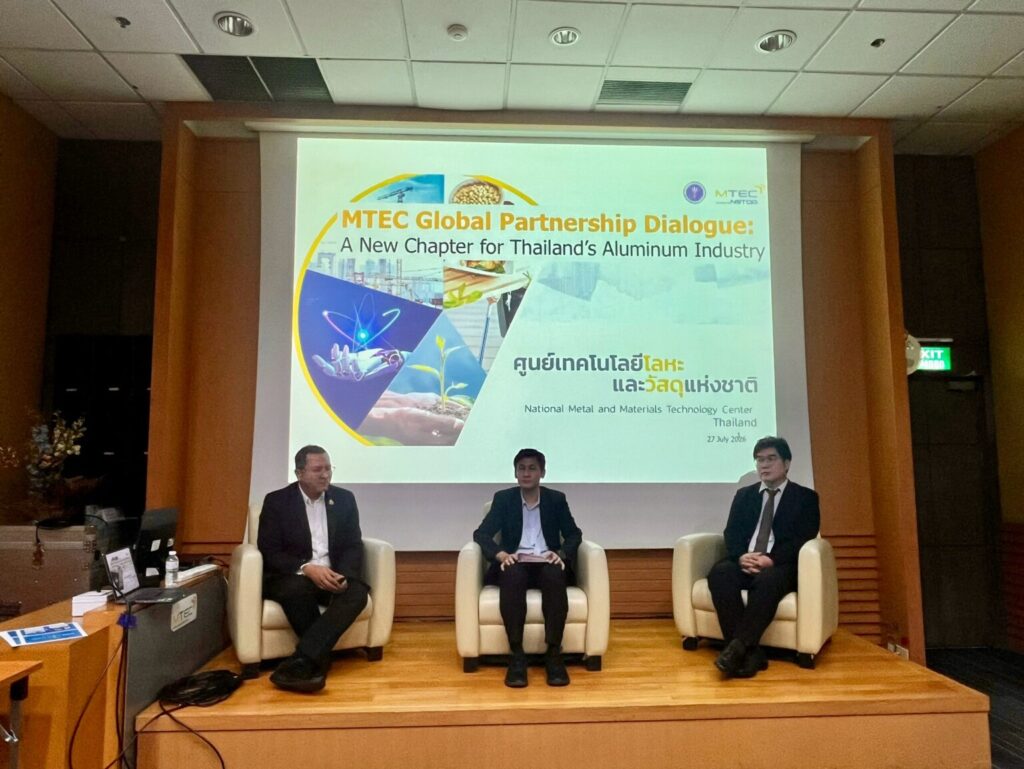
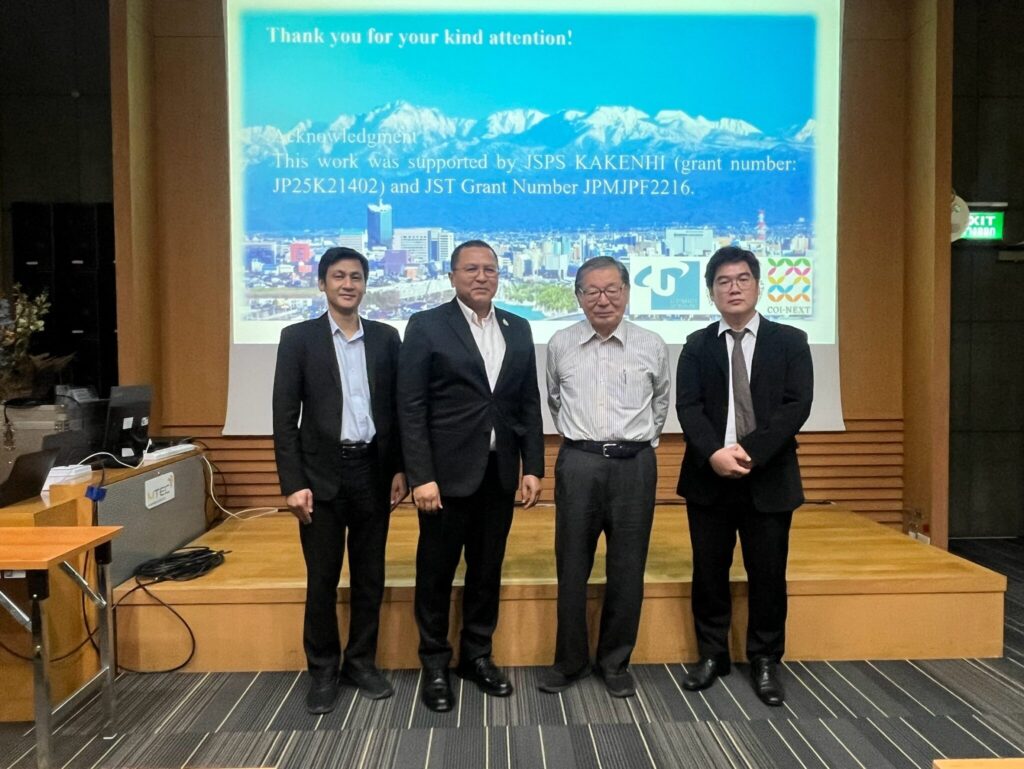
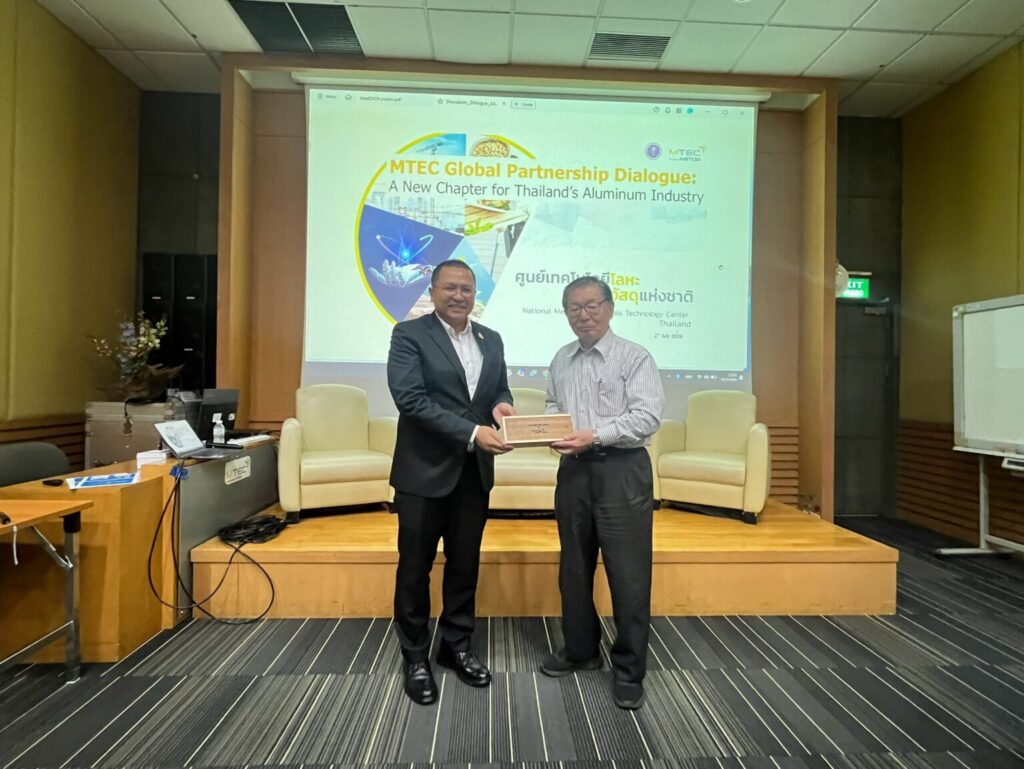
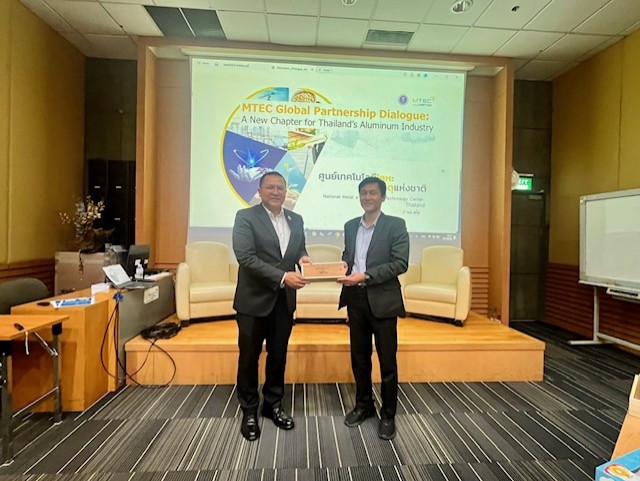
The National Metal and Materials Technology Center (MTEC), National Science and Technology Development Agency (NSTDA), organized MTEC Global Partnership Dialogue Episode 5 under the theme “Aluminum Recycling: Sustainable Pathway for Domestic Aluminum Manufacturing.” The seminar aimed to broaden perspectives on aluminum recycling, promote sustainable domestic aluminum manufacturing, and provide a platform for exchanging views on future research collaboration, technology development, and the advancement of Thailand’s aluminum industry.
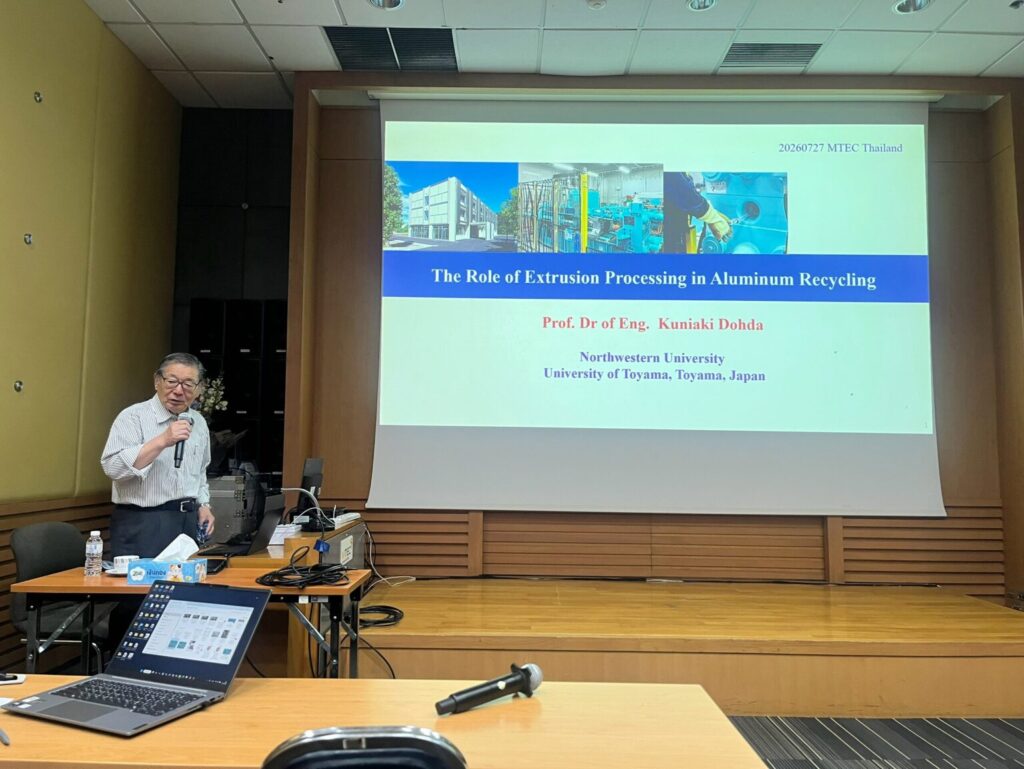
The seminar included a distinguished lecture by Professor Kuniaki Dohda, Special Advisor to the President of the University of Toyama, Japan, titled “Beyond Technology – How Japan Built a World-Class Manufacturing Innovation Ecosystem.” He discussed Japan’s methods and experiences in creating a manufacturing innovation ecosystem, sharing insights on technology and aluminum industry growth. The conversation highlighted global trends toward sustainable development and carbon neutrality. Aluminum is gaining importance because of its lightweight strength, durability, and recyclability, making it vital for reducing energy use and greenhouse gases, strengthening domestic manufacturing, and supporting the Circular Economy.
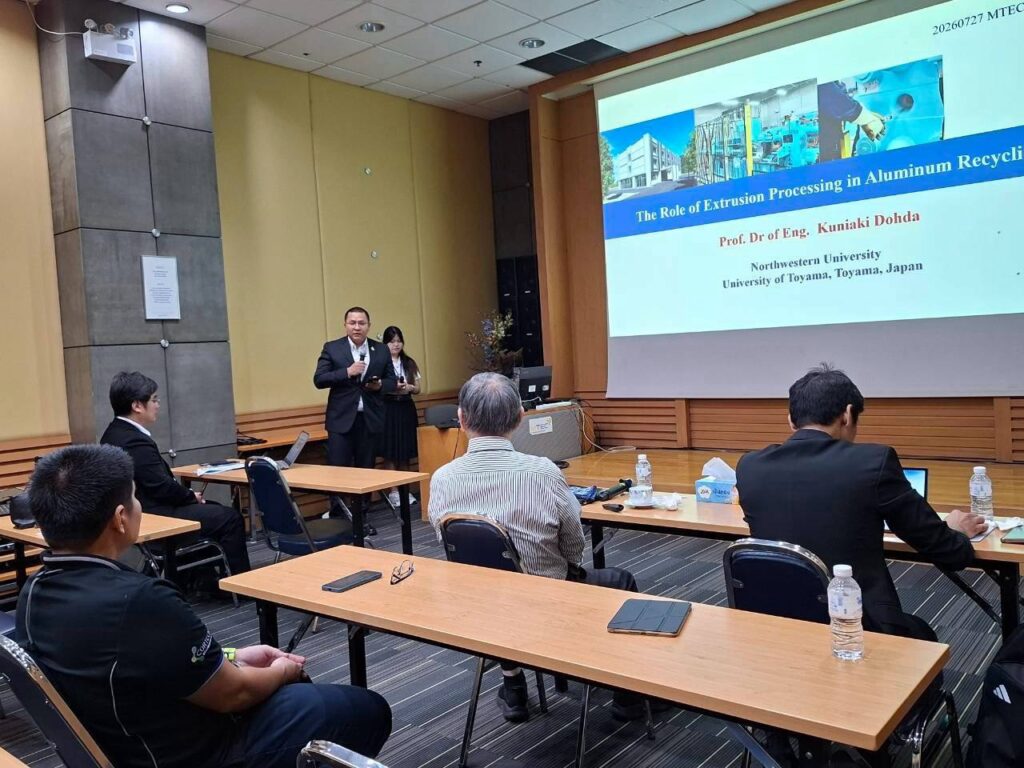
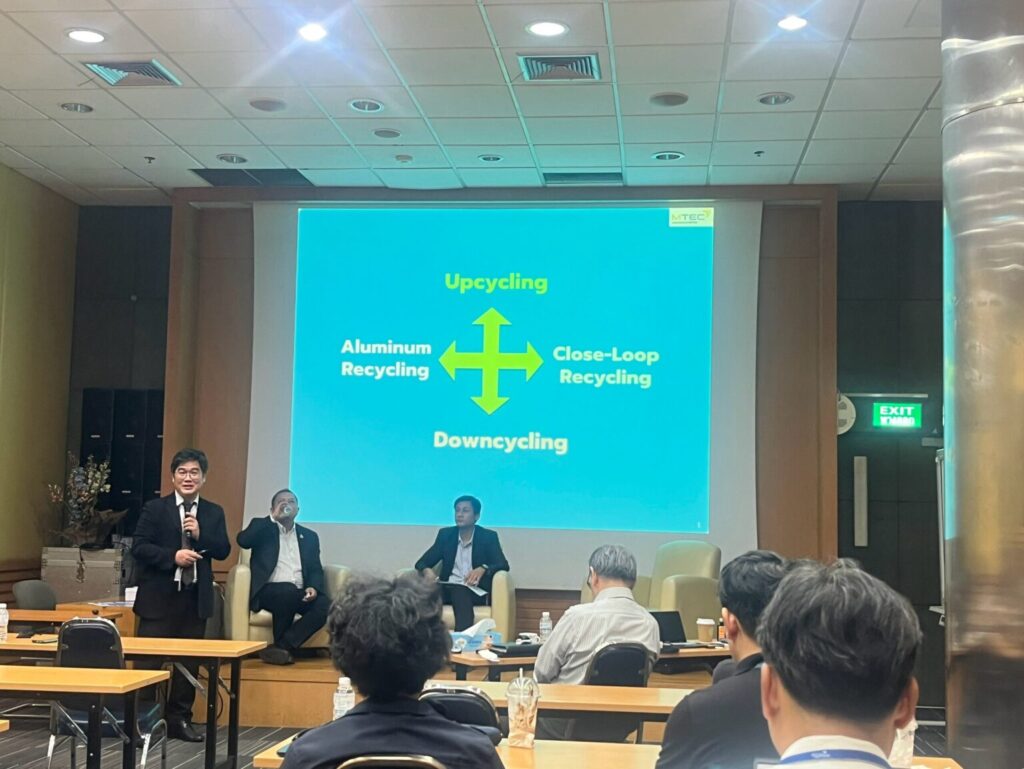
The seminar also featured a panel discussion entitled “The Next Move for Thailand’s Aluminum Industry and Research Community,” with Dr. Ekkarut Viyanit, Deputy Executive Director of MTEC; Asst. Prof. Dr. Sukunthakan Ngernbamrung of the University of Toyama; and Dr. Chakkrist Phongphisutthinan, researcher from MTEC’s Future Mobility Technology Research Team. The panelists exchanged perspectives on research directions, technological collaboration, and approaches to enhancing the competitiveness of Thailand’s aluminum industry.
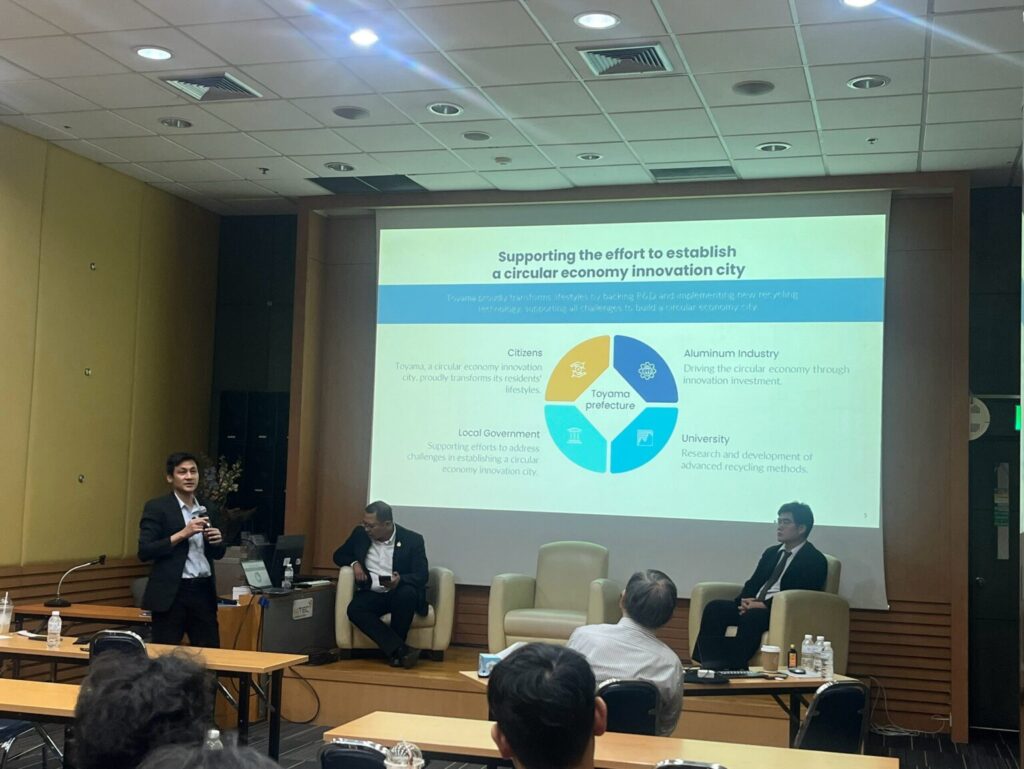
Asst. Prof. Dr. Sukunthakan shared Japan’s experience and perspectives on developing and upgrading the aluminum industry, explaining why aluminum recycling has become a key priority for Japan. Recycling strengthens raw material security, reduces dependence on imported primary aluminum, and lowers energy consumption and greenhouse gas emissions. He also outlined Japan’s integrated approach covering sorting, collection, remelting, and quality control throughout the production chain, and offered recommendations for Thailand on strengthening aluminum recycling systems, developing quality standards, fostering public-private collaboration, and improving the competitiveness of the Thai aluminum industry alongside sustainable and circular-economy development.
Dr. Chakkrist shared research experience in improving the quality of aluminum recycling and discussed future research directions. He suggested that Thailand should place greater emphasis on research and development of recycling technologies that improve recycled-material quality, increase resource efficiency, and raise production standards in line with industrial requirements. He also proposed strengthening Thailand–Japan research collaboration in aluminum technology, focusing on recycling technologies, recycled-material quality control, reducing energy consumption and greenhouse gas emissions, and transferring knowledge and innovation. These efforts would help enhance the competitiveness of Thailand’s aluminum industry and support sustainable development.
The seminar exemplifies MTEC’s position as a central junction that bridges the research, industrial, and governmental sectors to promote advancements in materials and cutting-edge manufacturing. Such collaboration is instrumental in enhancing Thailand’s competitiveness and fostering the sustainable development of the nation’s aluminum industry in the future.