
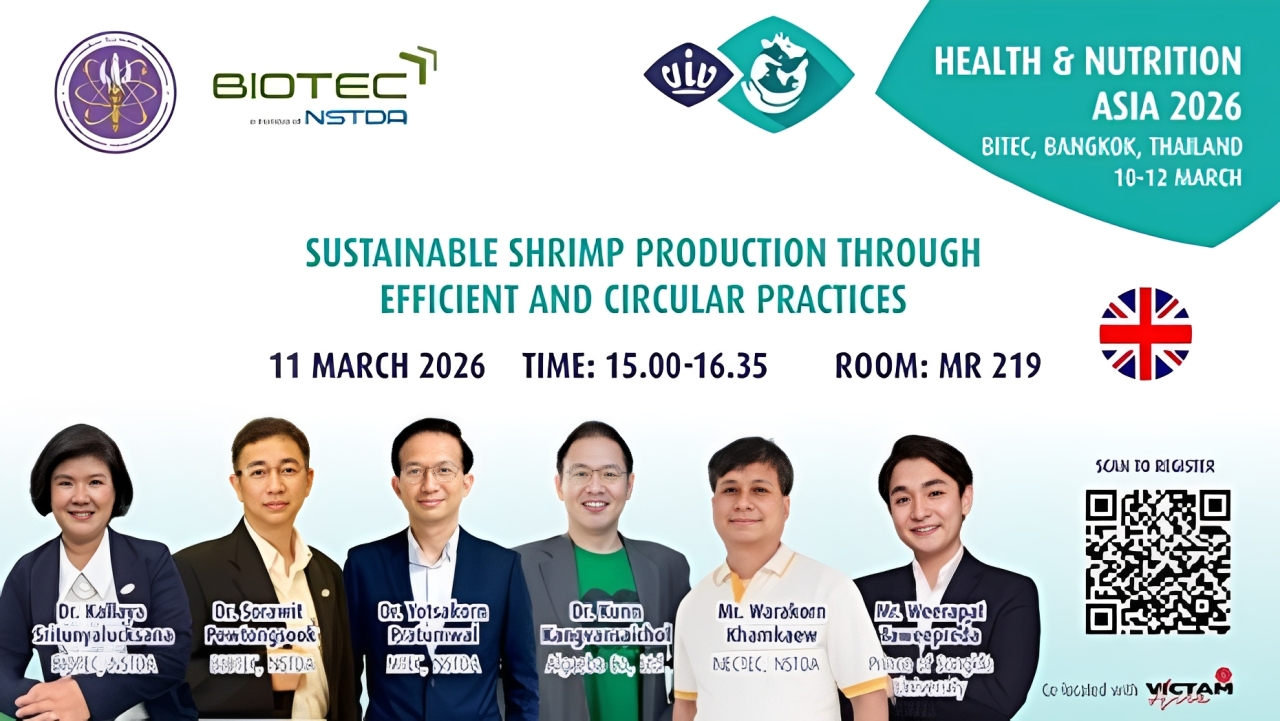
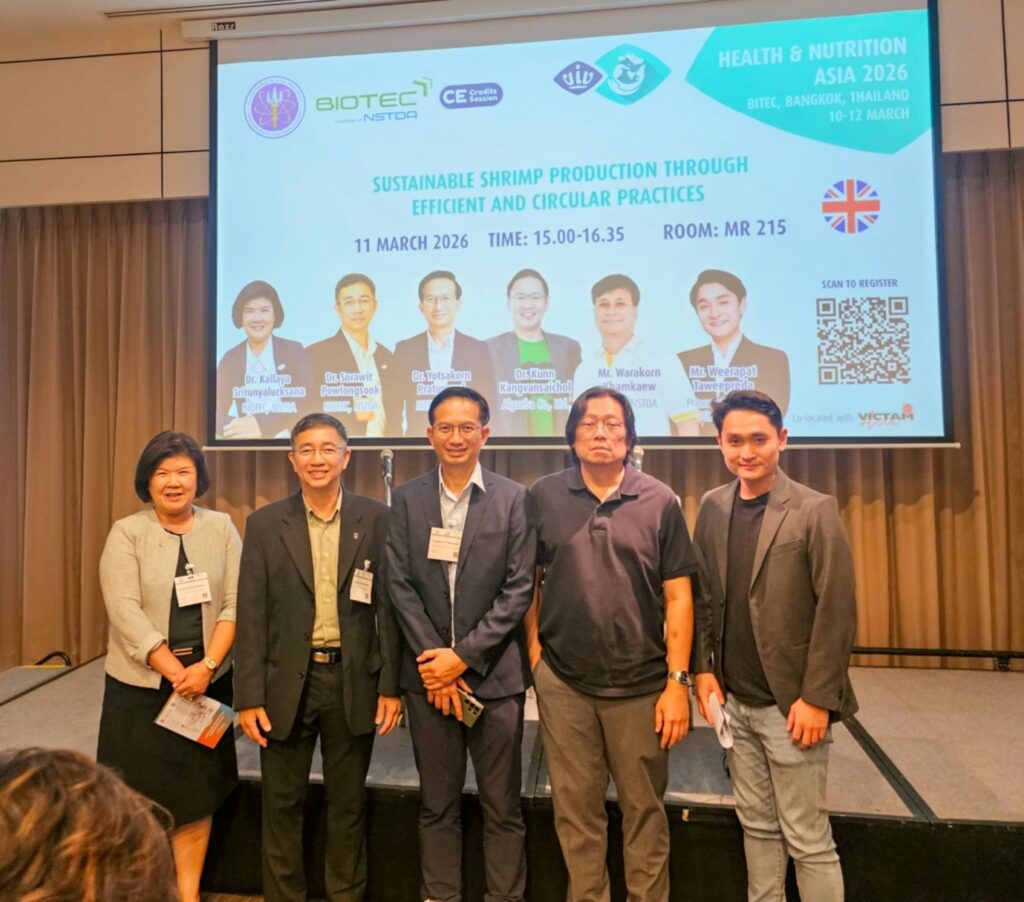
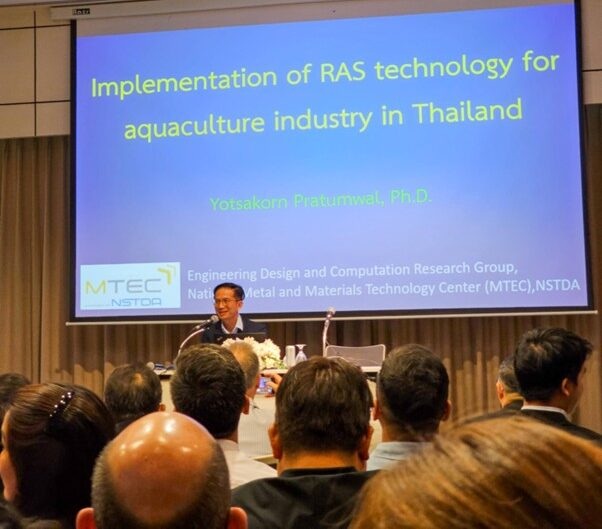
On Wednesday, March 11, 2026, the National Metal and Materials Technology Center (MTEC), under NSTDA, was represented by Dr. Yotsakorn Pratumwal, a Senior Engineer and Research Team Leader for the CAE Research Team (Computer-Aided Engineering Research Team). Dr. Pratumwal delivered a presentation titled “Implementation of RAS Technology for Aquaculture Industry in Thailand” during the convening as “Sustainable Shrimp Production Through Efficient and Circular Practices” at the Health & Nutrition Asia 2026 conference. This premier exhibition and conference for animal health and nutrition businesses in Asia took place from March 10–12, 2026, at the Bangkok International Trade & Exhibition Centre (BITEC) in Bangkok. Further details are available at https://healthandnutrition.viv.net/visit/conference-program
The research and development concerning the Recirculating Aquaculture System (RAS) technology at the National Science and Technology Development Agency (NSTDA) has been conducted by a multidisciplinary research team comprising experts from BIOTEC, NECTEC, and MTEC. This initiative aims to facilitate the broader adoption of RAS technology within Thailand’s aquaculture industry, which is estimated to be valued at over 100 billion baht annually. The technology is designed to mitigate the inherent limitations associated with traditional cultivation methods utilized in earthen ponds or cages, including excessive water consumption, water pollution, an increase risk of aquatic diseases, and welfare concerns stemming from environmental fluctuations—such as flooding, drought, or the deterioration of water quality in open-water cage systems—as well as the requirement for extensive farming areas.
Recirculating Aquaculture System (RAS) technology functions as a closed-loop farming system wherein wastewater is treated, oxygenated, and subsequently recycled. This method minimizes the requirement for frequent water exchanges, facilitates high-density aquaculture in limited spaces, and enables superior control and monitoring of critical parameters compared to traditional systems. Consequently, it significantly mitigates the risk of aquatic diseases. However, RAS has been employed primarily at a small scale —typically for high-value species such as salmon and trout—owing to higher initial capital expenditures and the necessity for intensive monitoring and rigorous management, which can limit its accessibility.
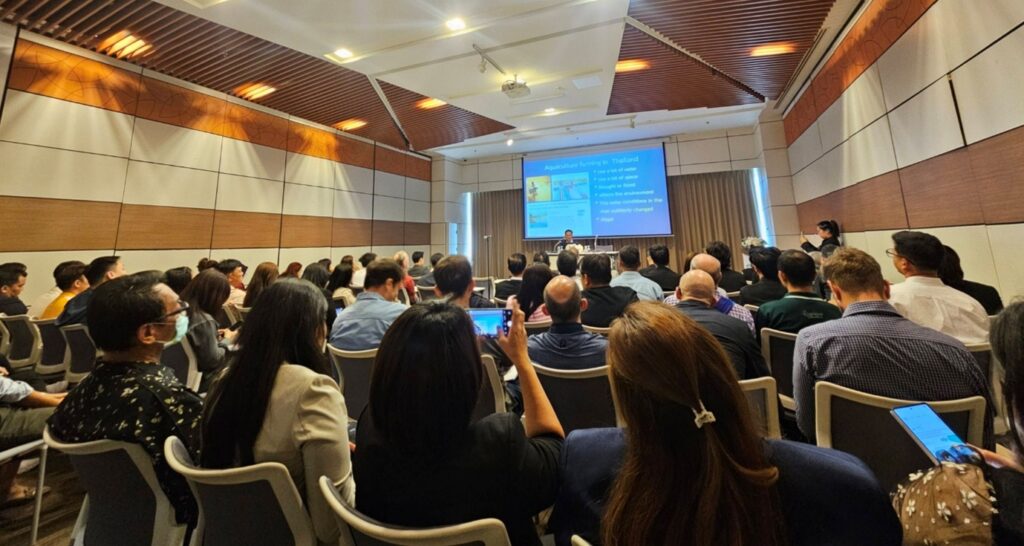
NSTDA has engineered RAS systems tailored for shrimp and seabass, which represent some of Thailand’s most significant economic aquatic species. The systems are designed to be more cost-effective than existing alternatives, thereby facilitating a more rapid return on investment and streamlined system control. This innovation integrates advanced engineering design and computational technologies with automated control systems and the Internet of Things (IoT) to enhance operational efficiency. Furthermore, future enhancements are currently being developed, utilizing Artificial Intelligence (AI) and image processing technologies to optimize oversight and management of aquaculture operations.