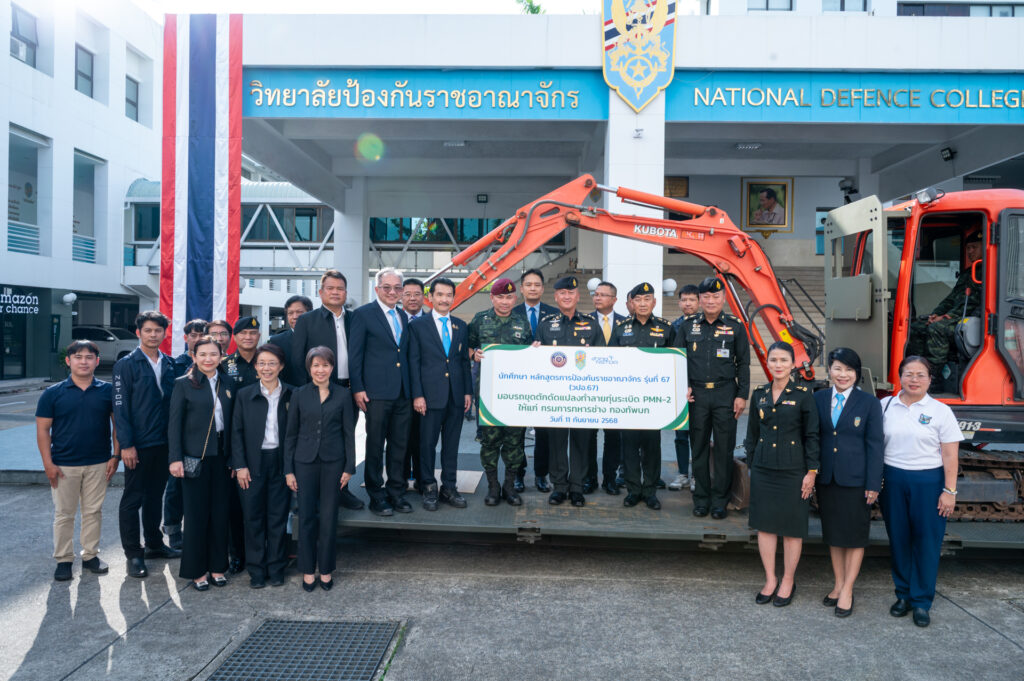
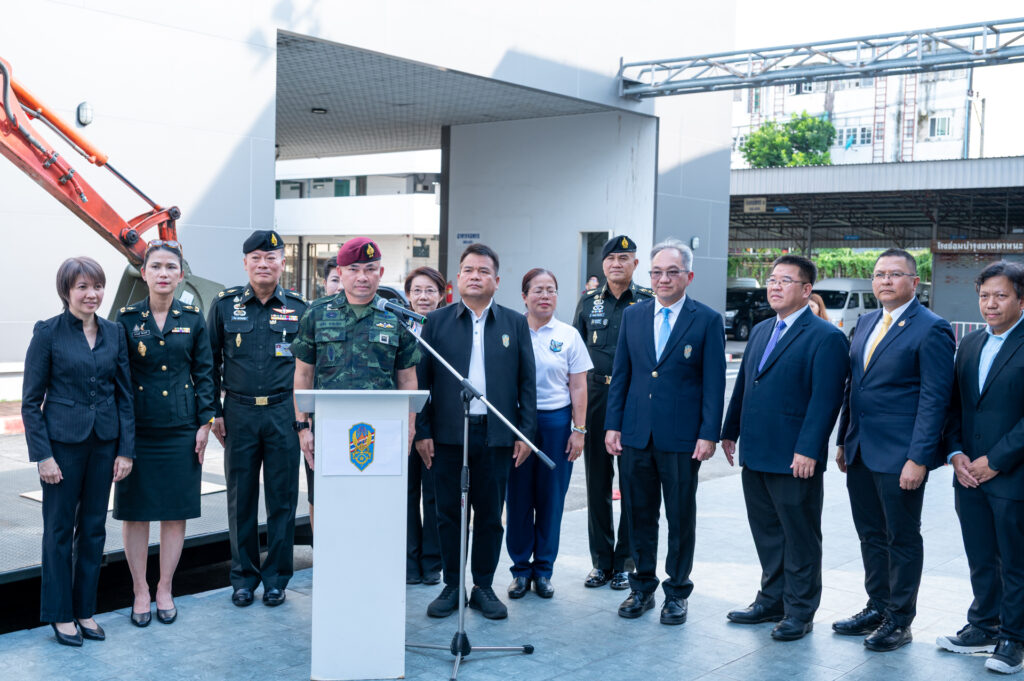
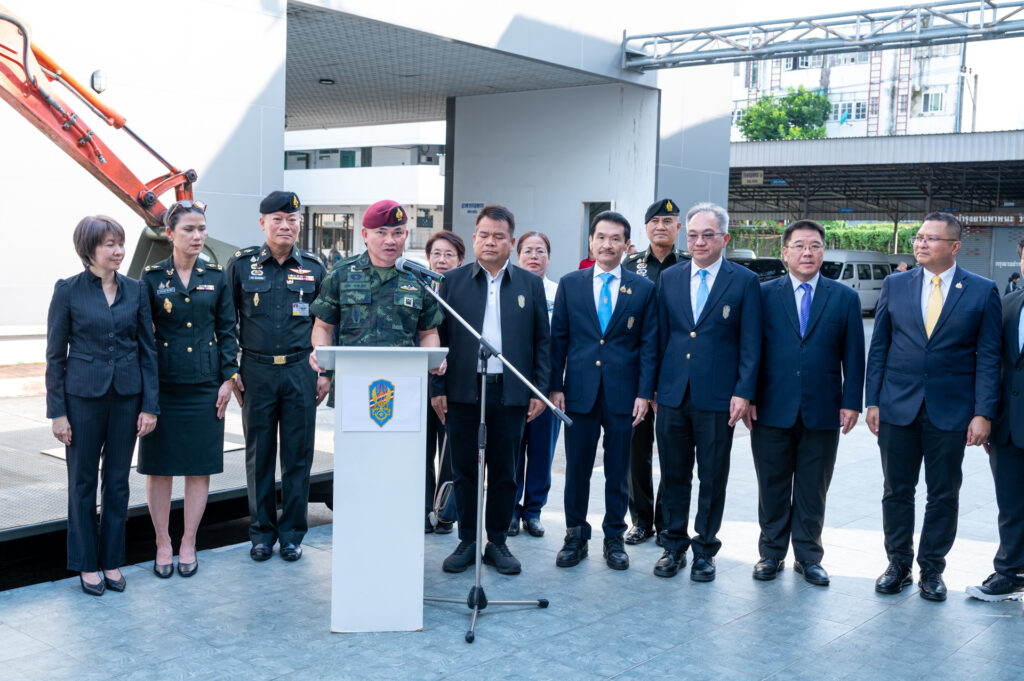
Prof. Dr. Sukit Limpijumnong, President of the National Science and Technology Development Agency (NSTDA) and a member of NDC Class 67, added that, “NSTDA, through the National Metal and Materials Technology Center (MTEC), with support from the NDC Class 67 cohort, has developed the prototype landmine-neutralization machine. The project was spearheaded by Dr. Ekkarut Viyanit, Director of the Rail and Modern Transport Technology Research Group (RMT), who oversaw the advanced engineering design and material technologies utilized for neutralizing PMN-2 landmines.
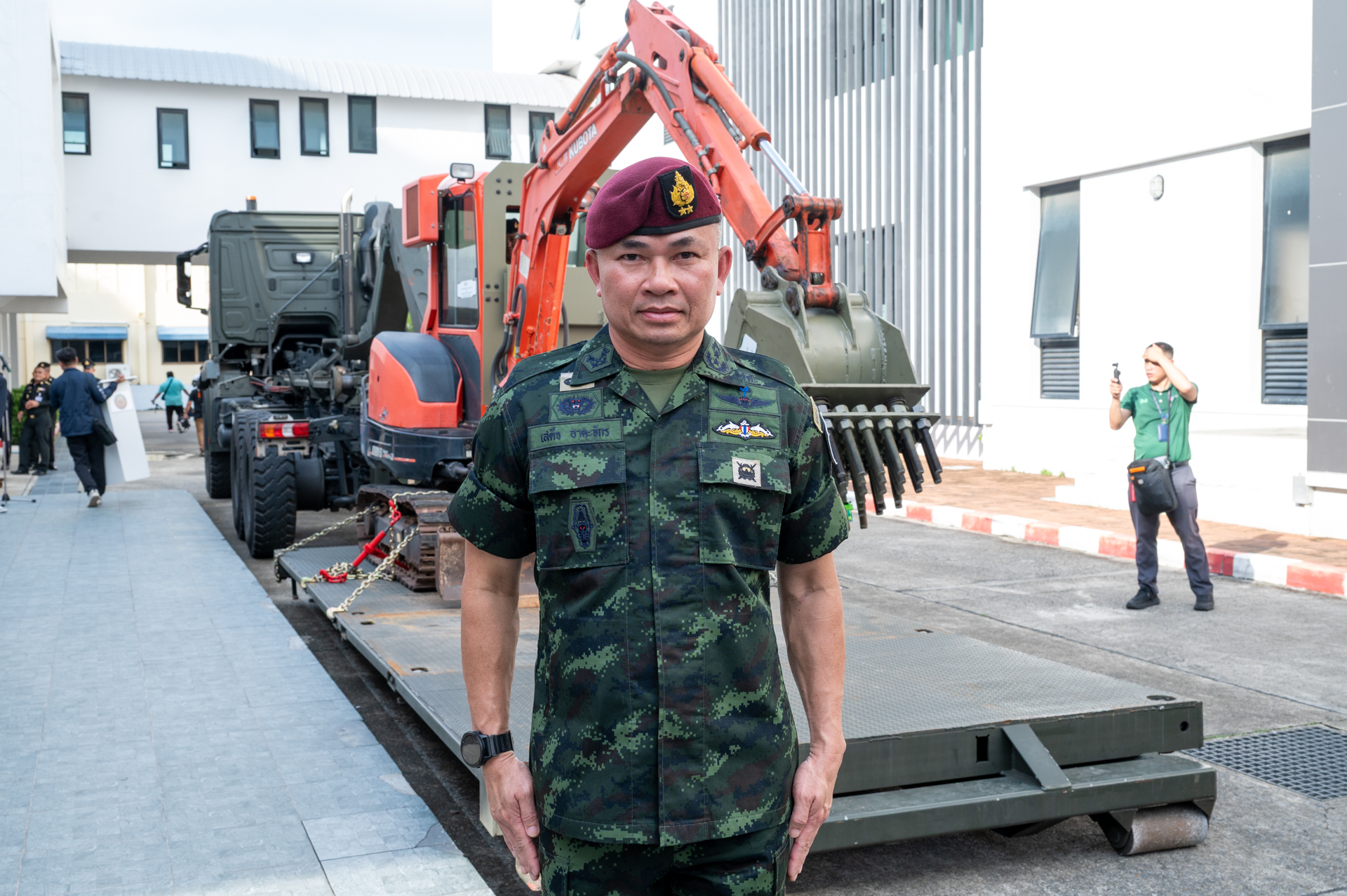
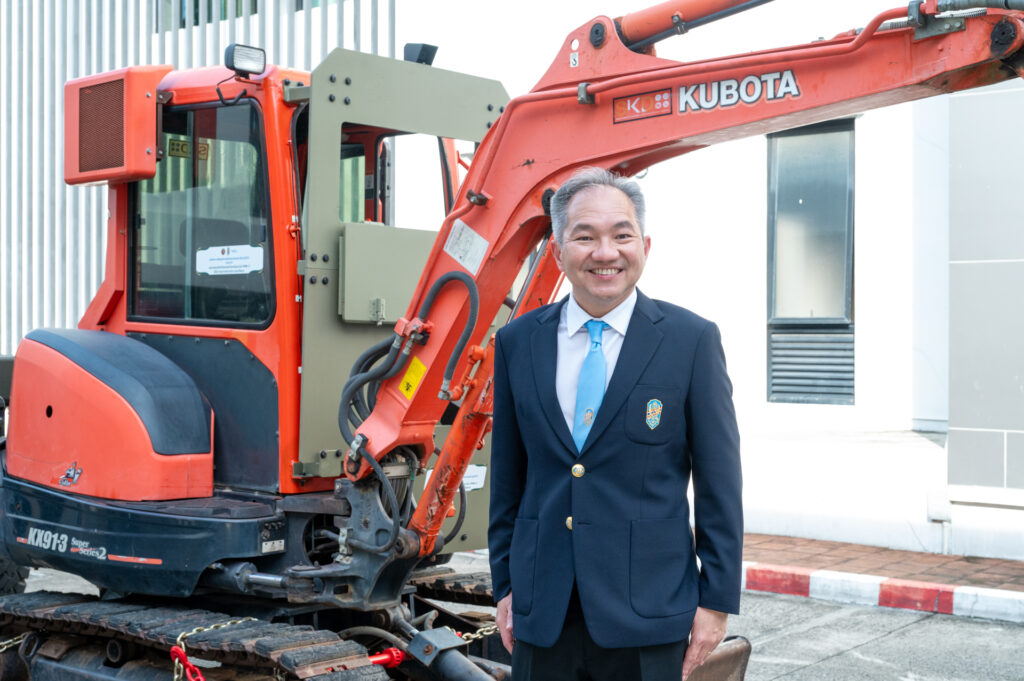
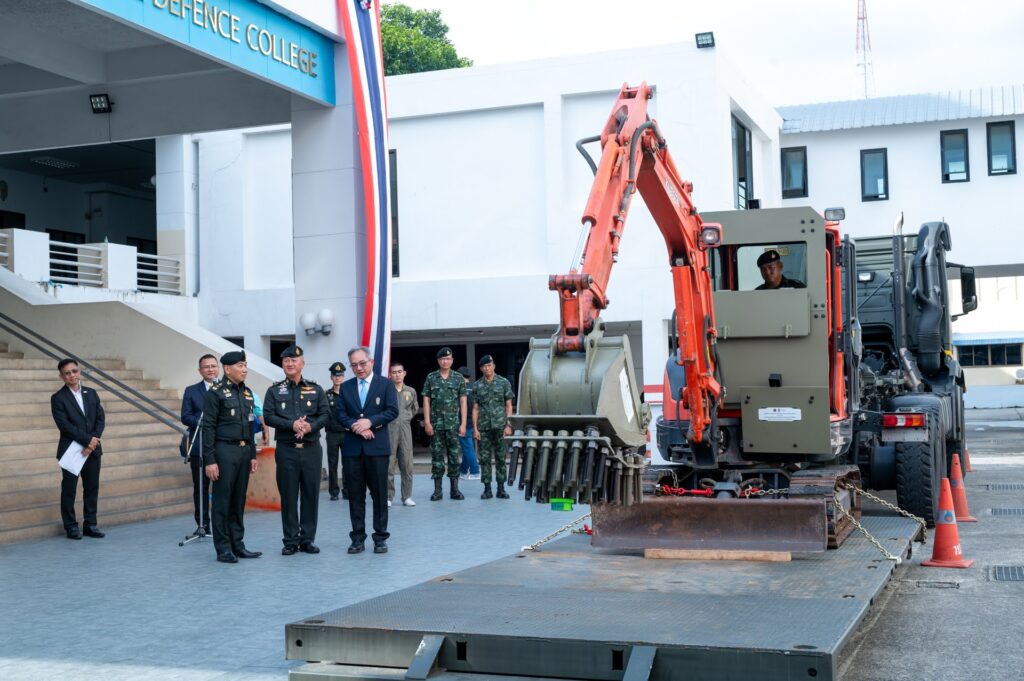
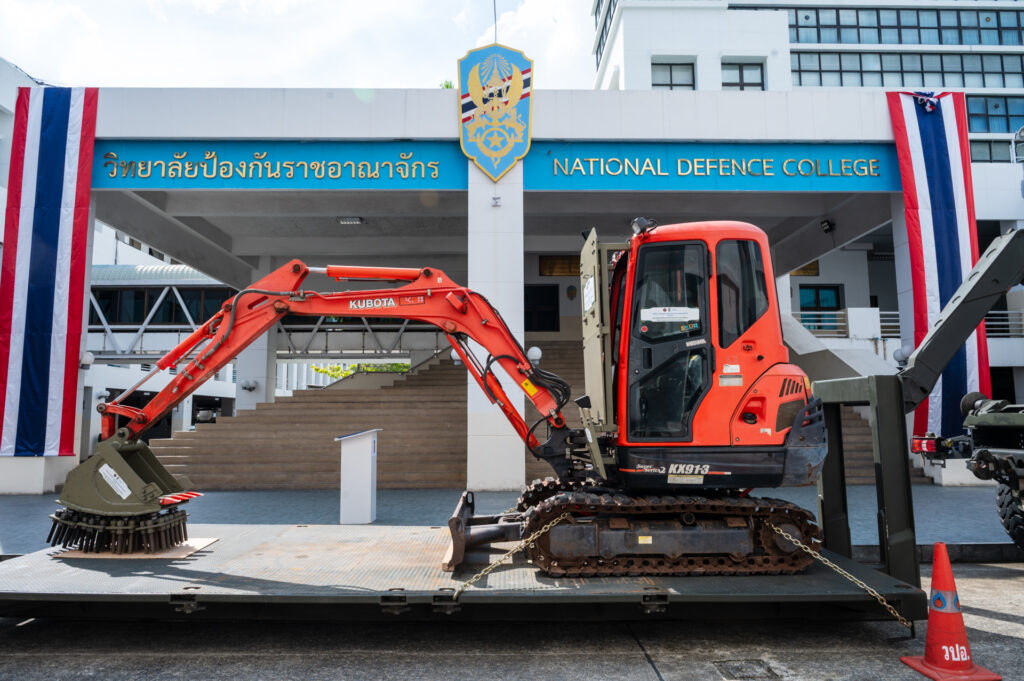
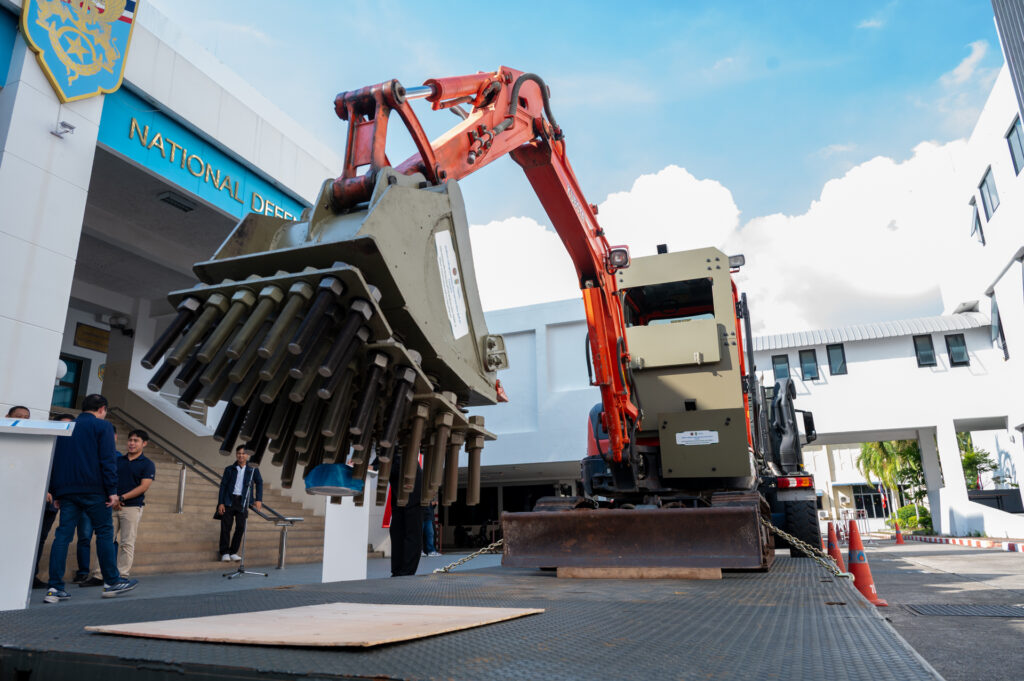
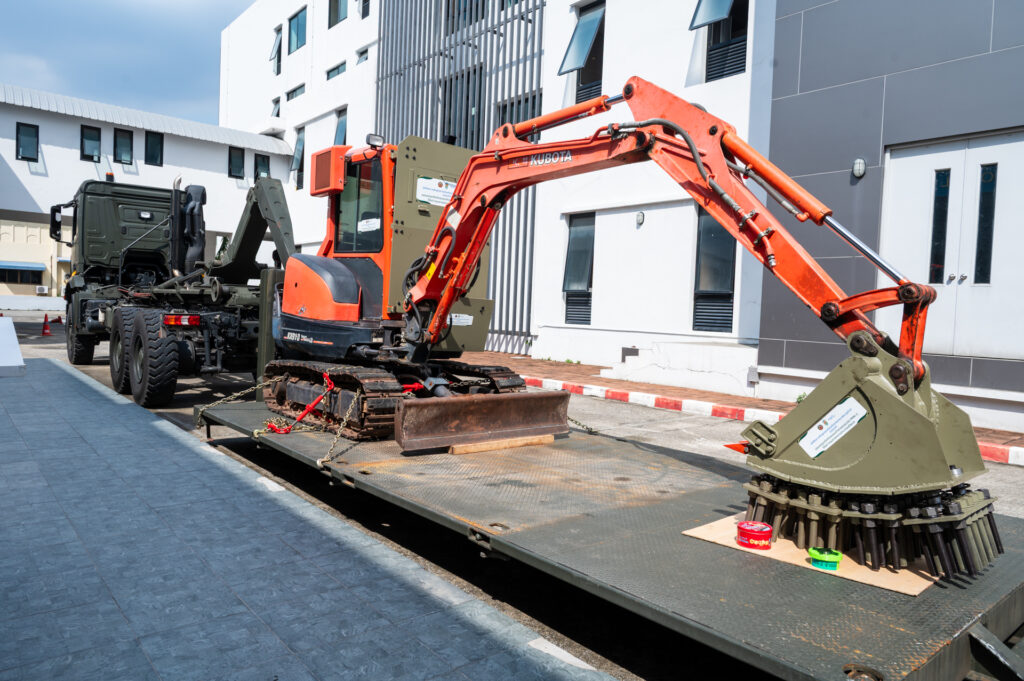
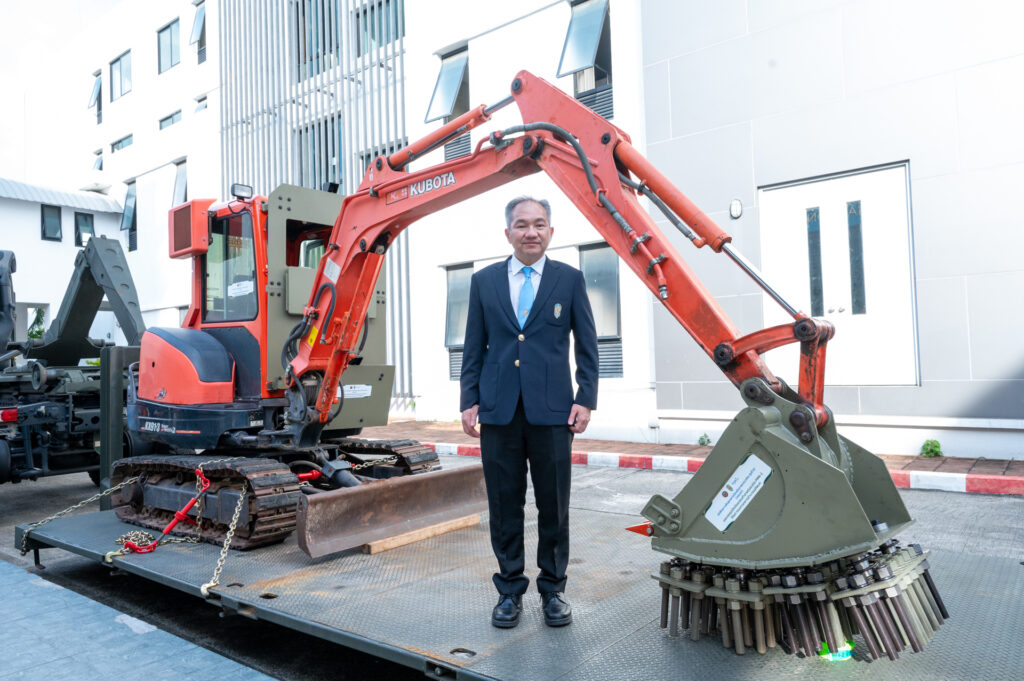
The innovation began with the concept of modifying a compact excavator (approximately 3.5 tons), which was selected for its maneuverability on steep, rugged terrain, ease of operation, and durability. The excavator was subsequently fitted with a landmine-neutralizing attachment and reinforced with an armored operator cabin, thus ensuring personnel remained protected during operations.
Advanced engineering design, incorporating 3D modeling and computer simulation, was applied to engineer the machine components with precision, thereby ensuring dimensional accuracy for fabrication and adequate structural strength to withstand explosive pressure. The team also analyzed blast-pressure behavior that could pose risks to operators, using computer-based simulations to study potential human hazards.
Given MTEC’s extensive experience with high-strength materials, the protective armor for the operator cabin was fabricated from S700 structural steel (minimum yield strength of 700 MPa) with a thickness of 12 mm. The newly designed Landmine Punching Destroyer unit was developed specifically to meet the operational requirements for PMN-2 neutralization. The ‘punch rod’ was engineered with an optimal standoff distance from the ground surface to dissipate blast pressure and reduce the potential for rapid component damage. The rod is made from medium-carbon steel, heat-treated for sufficient strength (yield strength of 720 MPa), and manufactured as a threaded stud bolt with a 28.5 mm diameter, thereby allowing easy removal, replacement, or repair during field operations along the border.
The prototype was successfully completed within a short development period of just one month and is now ready to be handed over to the Royal Thai Army’s Corps of Engineers for field testing and evaluation. Real-world use will enable the research team to collect feedback and operational data, which will guide improvements and inform the development of future versions.”